

Everyone has experienced anger. The intensity of your anger can range from profound annoyance to extreme rage. It’s normal and healthy to feel angry from time to time in response to certain situations.
Anger and the body
Anger is not just an emotion. It’s a physiological reaction and is part of your body’s natural “fight or flight” response to threats. These include a cascade of changes that naturally occur in the body such as:
- A flood of stress hormones causes the heart to beat faster and increase blood flow to the muscles and organs
- Increase in blood pressure and pulse rate
- Breathing gets faster, helping the lungs take in more oxygen than usual, which makes you more alert and sharpens your senses, including sight and hearing.
- An increase of the hormone epinephrine causes blood glucose levels to rise, providing the body more energy to take action—to flee or fight.
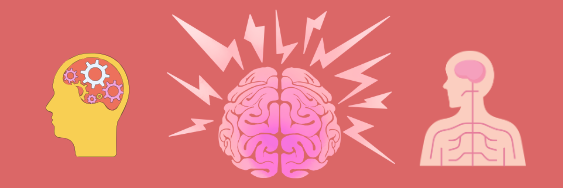
Evolutionary Purpose of Anger
From an evolutionary view, anger has been key to our survival. It helps us spot and deal with dangers, defending us or our resources. Anger also spurs us to face and beat challenges, building our resilience and determination.
How Anger Affects the Brain
When we get angry, our brain’s limbic system, especially the amygdala, springs to life. This sets off a chain of physical reactions, like the release of adrenaline and cortisol. These hormones get our body ready for action, making us feel more alert and ready to face the threat.
The Anger Response Cycle
- Trigger: An event, situation, or thought that elicits a sense of irritation, annoyance, fury, or wrath.
- Physiological Response: The body’s activation of the fight-or-flight response, with increased heart rate, blood pressure, and muscle tension.
- Emotional Experience: The subjective feeling of anger, which can range from mild irritation to intense fury or wrath.
- Cognitive Appraisal: The individual’s interpretation and evaluation of the triggering event, often involving a perception of injustice, threat, or obstacle.
- Behavioural Expression: The outward manifestation of anger, which can range from verbal expressions to physical aggression.
What Triggers Anger?
Various factors can trigger anger. Common triggers include perceived injustices, perceived threats, and unmet expectations. For example, feeling overlooked at work or mistreated can provoke anger.
Stressful situations, like heavy traffic or waiting in a queue, can also trigger anger. Identifying what sets off your anger is the first step in understanding and managing it.
7 roots of anger
Try this activity. Fill in the blank to this statement: “I feel angry when ….”
Your anger would probably arise from one or more of these situations.
- Physical pain or stress – depending on our coping ability, we react in anger when in varying levels of pain or discomfort.
- Sensory needs unmet – this is more prevalent in people with sensory integration issues, some of whom may have autism or ADHD. When the coping strategies are insufficient and the body is overwhelmed, we tend to feel out of control. If you exhibit short-tempered behaviour in a crowded, noisy, hot and foreign environment, chances are your body is trying its best to cope and you need to give it a break, or have a coping strategy.
- Conscious cues of threats and feeling unsafe – our brain is developed to swiftly protect us from perceived threats and one of the strategies we use is to get angry. Anger as a fear response is often useful in moments of danger, physical or otherwise as it stimulates energy to act.
- Activated threat detection – we may unconsciously be under threat, resulting in anger at the tiniest things. One of the reasons could be a heightened alertness to dangers due to past or developmental trauma. It could also relate back to the sensory over-stimulation which overloads the brain.
- Unmet needs – when important needs are unmet, anger surfaces to give us the energy to express our desire to have those needs fulfilled. Such needs often relate to social connection (relationships, intimacy, recognition) and may also relate to basic needs of safety and security.
- Loss of control – anger could be helpful for us to gain control of a situation. In moments where power and control over a situation or in a relationship is altered, anger arises to wrestle it back. If often used to a desired effect, we develop a habit of using anger to regain control leading to behaviours that have negative consequences.
- Justice issues – Anger leaves clues to our moral compass, values and sense of justice. When we discern the purpose of our anger response, it usually bears a message of what should be and how this situation should not have happened. In couples or relationships therapy, the injustice leads to anger and, if left unattended to, the injustice breeds contempt.
Disrespect Anger
Disrespect and anger can also be deep-seated and intense. Maybe someone hasn’t listened to you; maybe they have ignored you; maybe they have called you names, insulted you, or diminished you in some way. Disrespect and anger can also be deep-seated and intense.
The secret to dealing with disrespect anger, whether you’re experiencing it yourself or are accused of disrespect, is to focus on the emotion. For example, if you felt that anger arise, you would say something yourself like “I feel angry and disrespected.”
Anger Avoidance
Anger avoidance occurs when people are angry, but repress it. They go to extremes to be “nice” all the time. The root cause lies in childhood programming that teaches that being angry is bad, evil, and wrong. The problem with anger avoidance is that the stress causing the anger in the first place is not getting resolved. This will cause severe health problems as the cortisol levels begin to break down the immune system and digestive efficiency.
Shame Anger

Shame anger occurs when we feel embarrassed, humiliated, ashamed, or embarrassed. Like most other anger, shame anger originates in childhood. Shame is painful so people will become angry rather than admit to being shamed.
Habitual Anger
It can become a habit, being grumpy and mad all the time. They’re probably not even aware that they’re grumpy and mad. Of course, people start to avoid them because they’re unpleasant to be around, and that just makes them even grumpier. They become more lonely and feel abandoned which just feeds their anger. Why Am I So Angry
You can help people break out of habitual anger by acknowledging it. “You’re angry. You’re really frustrated. Life didn’t turn out the way that you thought it should.”,
This kind of reflection will help people who have habitual anger move into a place of calm. Once they start experiencing that calm state again, their anger will tend to go away.
When anger is a problem
symptoms of an anger problem?
Some signs that your anger is not normal include:
- Anger that affects your relationships and social life
- Feeling that you have to hide or hold in your anger
- Constant negative thinking and focusing on negative experiences
- Constantly feeling impatient, irritated, and hostile
- Arguing with others often, and getting angrier in the process
- Being physically violent when you’re angry
- Threatening violence to people or their property
- An inability to control your anger
- Feeling compelled to do, or doing, violent or impulsive things because you feel angry, such as driving recklessly or destroying things
- Staying away from certain situations because you’re anxious or depressed about your angry outbursts
What are the diagnostic criteria for an anger problem?
Anger itself doesn’t constitute a mental disorder, so there’s no set diagnosis for anger problems in the new edition of the Diagnostic and Statistical Manual of Mental Disorders (DSM-5).
Never Get Angry Again: The Foolproof Way to Stay Calm and in Control in Any Conversation or Situation by Dr. David J. Lieberman, Ph.D., provides a holistic, perspective-shifting approach to managing anger. It teaches readers to stop fueling anger, recognize early physical signs, and use practical, sometimes faith-based, tools to maintain emotional control.
Key details and takeaways from the book:
- Core Philosophy: The book argues that attempting to “manage” anger after it flares is ineffective. Instead, true calm comes from changing perspectives to prevent agitation in the first place.
- The 90-Second Rule: Anger takes 90 seconds for its physical, adrenaline-fueled part to dissipate, unless we consciously choose to fuel it with our thoughts.
- The “Pause” Protocol: A key technique involving a “breath pause” (three deep breaths) or a “physical pause” (stepping away) to break the automatic reaction, allowing the prefrontal cortex to take over, which helps prevent emotional hijacking.
- Root Cause Analysis: The author explains that anger is rooted in the ego and often stems from a lack of self-acceptance or fear, shifting blame to others.
- Practical Tools: The book offers techniques for navigating daily annoyances, improving relationships, and reducing the need to react defensively.
- Themes: Some readers found the content to have a strong, though helpful, focus on spiritual, emotional, and biblical principles, while others found it to be a practical, actionable guide.
The book is available as an audiobook, Kindle, and paperback, focusing on changing how one thinks to change how one feels.
How can you manage your anger at home?
Relaxation techniques
These include breathing deeply and picturing relaxing scenes in your mind. When trying to relax, breathe from deep within your lungs, inhaling and exhaling slowly in a controlled way. Repeat a calming word or phrase, such as “relax” or “take it easy.”
You may also want to visualize a relaxing experience, either from your memory or imagination. Slow, yoga-like exercises may also help relax your body and make you feel calmer.
Cognitive restructuring
Changing the way you think can change the way you express your anger. When a person feels angry, it’s often easy for them to think dramatically. It’s important to focus on expressing rational, rather than irrational, thoughts.
Avoid using the words “always” and “never” in your thoughts and speech. Such terms are inaccurate and can make you feel like your anger is justified, which makes it worse. These words can also hurt others who may be trying to help you arrive at a solution to your problem.
Problem solving
Anger can be caused by very real problems. While some anger is justified when something doesn’t go as planned, it’s not the anger that will help you fix the problem. The best way to approach a situation that’s making you angry is to not focus on the solution but to figure out how to address the problem.
You can do that by making a plan and checking in with it often so that you can check your progress often. Don’t get upset if the way the problem ends up getting resolved isn’t exactly the way you planned. Just make your best effort.
Communication
When people feel angry, they tend to jump to conclusions, which can be inaccurate. When you’re having an angry argument, slow down and think through your responses before lashing out. Remember to listen to the other person in the conversation. Good communication can help you resolve problems before your anger escalates.