 By admin
NAD (or NAD+) might not be a nutrient you’ve heard much about before, but it’s fast becoming one to buy.
In 2025, searches for NAD supplements have surged by over 200%, with increasing interest on Google and TikTok as people explore new options to boost energy and overall wellbeing.
Supplements should always be seen as an addition to, not a replacement for a balanced and varied diet or a healthy lifestyle.
So, what is NAD, what does it do in the body, and what does current research reveal?
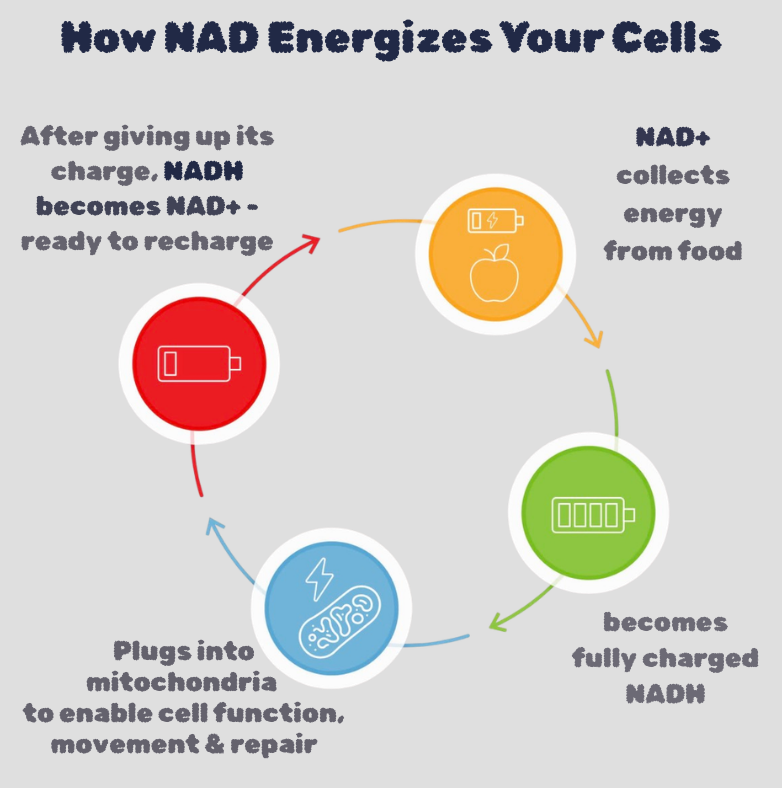
Nicotinamide adenine dinucleotide (NAD) is a essential coenzyme found in every living cell, acting as a critical helper molecule for metabolism, energy production, and DNA repair. NAD+ (the oxidized form) specifically accepts electrons to become NADH, a process vital for generating cellular ATP. Levels of NAD+ decline with age, leading to research into supplements.
Why do NAD levels change with age?
NAD⁺ levels naturally change as we get older, and factors like everyday stress and lifestyle can influence this. The body’s enzymes, which are natural proteins that help with things like breaking down food and releasing energy, use NAD⁺ as part of their usual activity. Free radicals from normal cell processes or environmental exposure, such as pollution, can also affect these pathways. Lifestyle habits, including how well you sleep, how active you are and what you eat, may play a role too.
NAD serves two primary purposes:
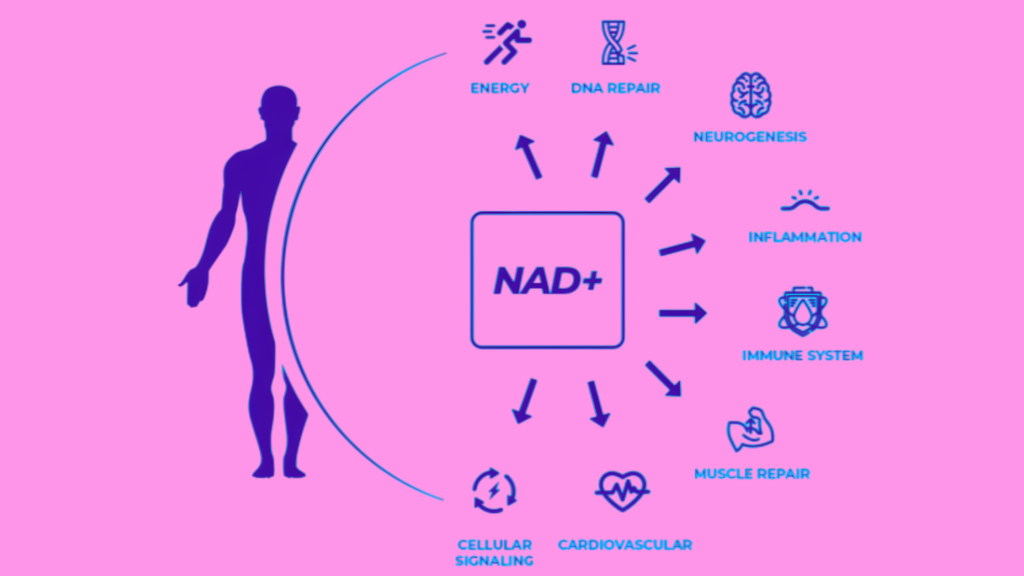
- Energy Production: It plays a crucial role in converting nutrients into ATP (the energy currency within your cells).
- Cellular Repair: NAD helps repair damaged DNA, enabling your body to recover from stress and aging.
Key Facts About NAD and NAD+:
- Definition: NAD (Nicotinamide adenine dinucleotide) is a coenzyme present in all living cells, essential for metabolism.
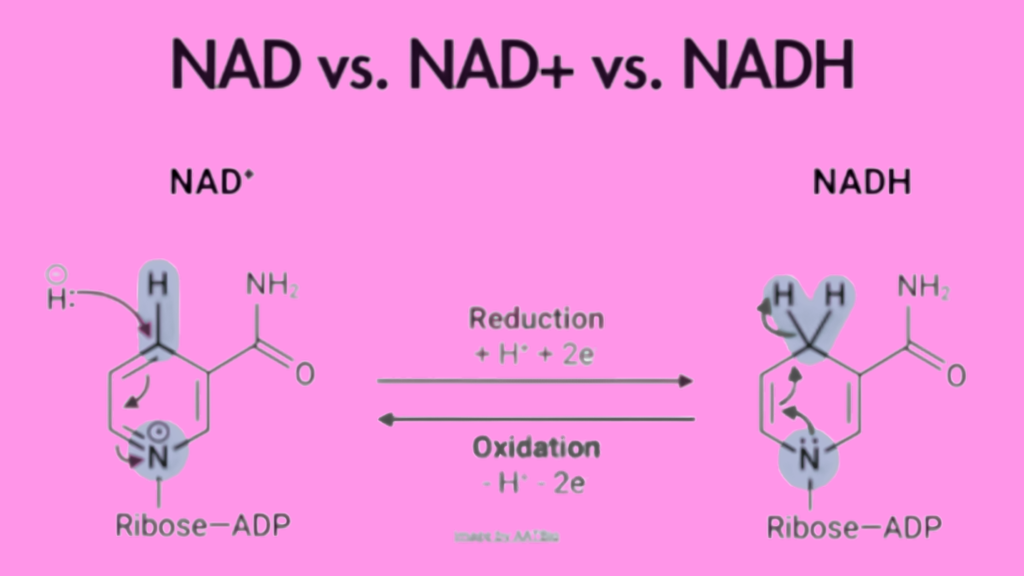
- NAD vs. NAD+: NAD refers to the molecule in general, while NAD+ is the specific “oxidized” form that accepts electrons during metabolic processes to become NADH.
- Function: It is crucial for redox reactions, DNA repair, and activating enzymes called sirtuins that regulate cellular health.
- Energy Production: NAD+ is critical for converting food into energy (ATP) in the mitochondria.
- Aging & Decline: NAD+ levels fall as we age, which is linked to metabolic disease, decreased energy, and age-related decline.
- Sources & Boosters: The body produces it from Vitamin B3. Boosters like NMN and NR can help replenish levels.
Key Differences:
- NAD+ (Oxidized): Active form that takes on electrons.
- NADH (Reduced): Formed after NAD+ accepts electrons.
Common Benefits of Boosting NAD+:
- Improved energy levels and metabolism
- Enhanced DNA repair and cellular resilience
- Potential for healthier, slower aging
What does the research say?
Our current understanding of the importance of NAD+ really began in the 1960s. Using nuclear extracts from hen liver, French scientist Pierre Chambon identified a process called Poly ADP-ribosylation, where NAD+ is broken down into two component parts, one of which (nicotinamide) gets recycled, while the other (ADP-ribose) meets up with a protein. This research formed the foundation of the field of PARPs, or poly (ADP-ribose) polymerases, a group of proteins that rely on NAD+ to function and perform cellular functions. PARPs are similar to another group of proteins called sirtuins in that they both only function in the presence of NAD+.
Research into NAD supplements is still in the early stages. Some small studies suggest that certain forms of NAD, like NMN and NR, can increase NAD⁺ levels in the blood, a molecule that helps the body make energy.
Other small studies have looked at things like sleep and signs of ageing, with some positive results, but it’s still too early to say for sure.
Key Concepts in Oxidation/Reduction and NAD:
- Oxidation (OIL): Oxidation Is Loss of electrons/hydrogen atoms.
- Reduction (RIG): Reduction Is Gain of electrons/hydrogen atoms.
- NAD+ (Oxidized): NAD+ accepts two electrons and a proton (H+) from a molecule, becoming reduced to NADH.
- NADH (Reduced): NADH acts as a reducing agent, donating electrons to another molecule (such as the electron transport chain), thus becoming oxidized back to NAD+.
- Biological Function: This constant cycling between NAD+ and NADH (redox) captures energy from broken-down nutrients to generate ATP.
Essentially, when a fuel molecule is oxidized during metabolism, NAD+ is reduced to NADH. Later, in the electron transport chain, NADH is oxidized to NAD+, releasing energy.
What is Oxidation and Reduction
Oxidation and reduction (often as redox reactions) are chemical processes in the body. These cellular processes involve the transfer of electrons between molecules. Specifically, oxidation is when a molecule loses electrons, and reduction is when a molecule gains electrons.
How To Boost NAD Levels Naturally
Here are several lifestyle strategies to maintain and even increase your NAD levels:
- Dietary Changes: Try to include foods rich in tryptophan (like turkey and chicken). You can also eat more niacin-rich foods like fish, avocados, and peanuts.
- Exercise: Regular physical activity stimulates NAD production. Focus on cardio and endurance workouts for best results.
- Sleep: Quality sleep helps regulate circadian rhythm and optimize NAD production. Aim for 7-8 hours of uninterrupted sleep.
- Calorie Restriction: Intermittent fasting or calorie restriction activates specific pathways (Sirtuins) associated with NAD production and longevity.
Types of NAD Supplements
- NAD+ Capsules: Convenient but less effective due to low bioavailability.
- NAD Precursors: Options like NMN (Nicotinamide mononucleotide) or NR (Nicotinamide riboside) may boost NAD production indirectly. Keep in mind individual results may vary due to absorption and conversion rates.
- NAD+ IV Therapy: This is the most direct way to replenish NAD+ levels. It delivers NAD intravenously for maximum absorption and immediate results.