

 By admin
I watched Channel 4’s The Great ADHD Myth with a mix of nerves, interest, frustration and sadness.
However, the Adhd myth isn’t easy to gauge, and I felt a lot of sadness and anger over the next day.
The Presenter – his credentials
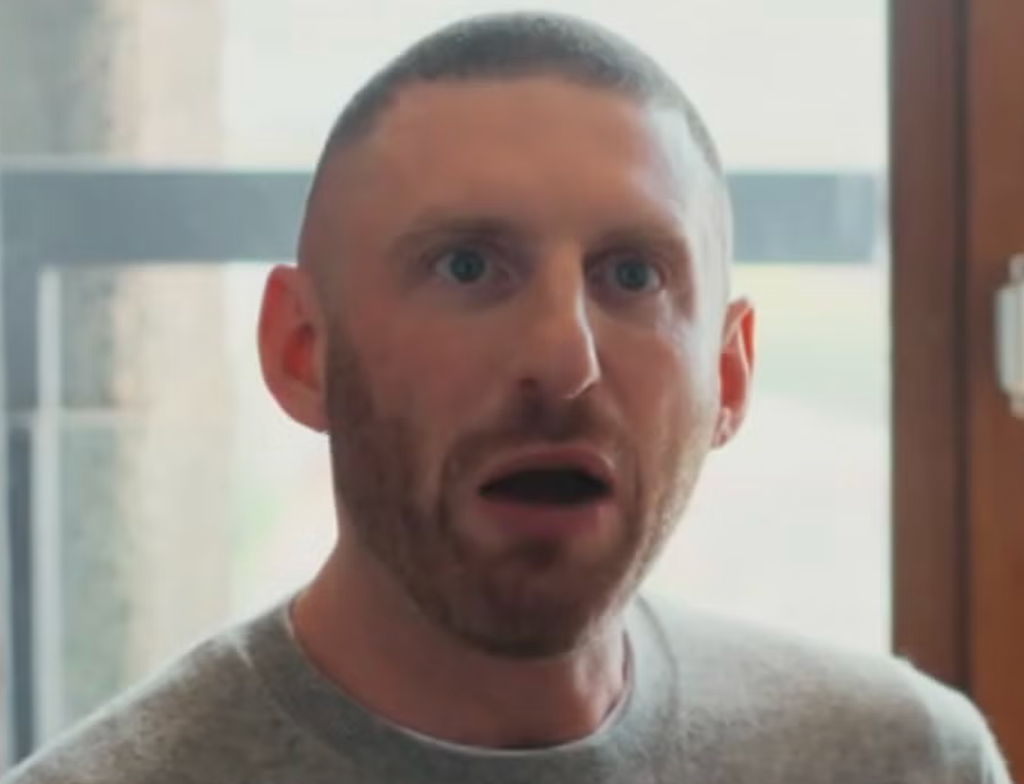
I found myself questioning the position of Dr Max Pemberton as the person chosen to present this programme.
Pemberton is an NHS psychiatrist whose clinical specialism is in eating disorders and addiction, rather than ADHD, yet he was placed at the centre of a programme questioning whether ADHD is a genuine neurodevelopmental disorder.
His personal experience of a private assessment should raise legitimate questions about the quality of some diagnostic services, but it cannot logically demonstrate that ADHD itself is a myth. A flawed or questionable diagnostic process does not mean that the condition being diagnosed doesn’t exist. (The Guardian)
I wonder what the GMC will make of it?
He chose to undergo a private online ADHD assessment himself. After receiving a diagnosis, he took ADHD medication as part of his investigation.
I found this particularly uncomfortable. The ADHD myth that diagnosis justifies medication felt reinforced here.
Watching a psychiatrist take a controlled drug he clearly didn’t support felt just wrong. It was almost recreational to question the legitimacy of a need for medication for a condition, which many people live with daily.
The General Medical Council (GMC) enforces strict ethical standards on professional conduct, integrity, and the mismanagement of controlled drugs. While the GMC does not issue preemptive rulings on individual television stunts, a doctor faking symptoms to secure and ingest unneeded Class B controlled drugs (such as ADHD stimulants) exposes them to serious regulatory scrutiny under several core tenets of the GMC Good Medical Practice guidelines.
1. Honesty, Integrity, and Public Trust
- The Rule: Doctors must always be honest and act with integrity, maintaining public trust in the medical profession both inside and outside their clinical practice.
- The Ethical Violation: Manufacturing or exaggerating clinical symptoms during a medical assessment constitutes a breach of professional probity. The GMC views deceptive behaviour—even when framed as investigative journalism—as actions that can heavily undermine public confidence in doctors.
2. Misuse and Diversion of Controlled Drugs
- The Rule: The GMC notes that controlled medicines present severe, unique dangers associated with dependency, public health risks, and professional misconduct.
- The Ethical Violation: Obtaining a Class B controlled substance under false pretences and consuming it without a genuine therapeutic need constitutes a diversion of medical resources. Using medical knowledge to “game” a diagnostic protocol to obtain tightly regulated drugs bypasses the safeguards meant to protect patients.
3. Promoting Safe Prescribing and Practice
- The Rule: Doctors must support safe prescribing frameworks and ensure that medications are only allocated based on an objective assessment of a patient’s genuine clinical need.
- The Ethical Violation: Publicly demonstrating that a diagnostic system can be tricked may be viewed by the GMC as behaving in a way that compromises the safety of wider prescribing networks. Critics and medical peers have argued this encourages public distrust in legitimate clinics and trivialises strict regulatory drug controls.
4. Health and Fitness to Practice
- The Rule: A doctor’s own health and consumption of substances must never compromise their professional standing or cloud their clinical judgement.
- The Ethical Violation: Voluntarily taking mind-altering, controlled stimulants when they are not clinically indicated can trigger the GMC’s fitness to practise pathways if it is determined the doctor’s insight, safety, or decision-making capabilities were compromised.
First the positives (well … the 1)
The Education system is one size fits all.
I absolutely believe we should question whether our education system works for every child. It clearly doesn’t.
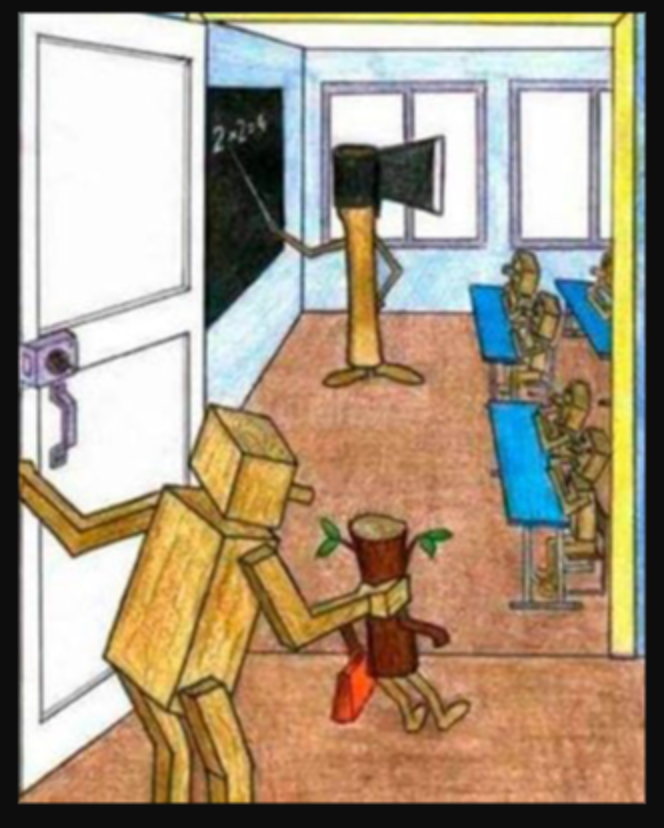
Children are expected to sit still, concentrate for long periods, regulate their behaviour, absorb information in a particular way and fit into a system that was never designed with every type of brain in mind. I can understand the concern that some children, particularly young boys, may be struggling in an environment that doesn’t suit them and that medication can sometimes become part of an attempt to make a child fit the system rather than asking whether the system needs to change.
I found this image a few years ago and it is heartbreaking to me. I wish I knew who to credit it to as it is spot on.
That is a conversation worth having.
The title
Calling the programme The Great ADHD Myth? felt very inflammatory to me, clickbaity and ragebaity.
Definition of the word myth
noun
- A traditional story, especially one concerning the early history of a people or explaining a natural or social phenomenon, and typically involving supernatural beings or events.”ancient Celtic myths”
- A widely held but false belief or idea.
Because I am a woman who was diagnosed with ADHD in my late forties, for someone like me, the word myth doesn’t feel academic.
It feels personal!
Before I had a diagnosis
For much of my life, I didn’t have an explanation for why certain things seemed to be so much harder for me than they appeared to be for other people.
I was diagnosed with Depression in my early 20’s, Anxiety in my 30’s, both along the way. I often wondered if I had bipolar, if I had a personality disorder, basically what was WRONG with me?
At school, I wasn’t seen as the girl with ADHD. I was the girl who was too talkative, too loud, easily distracted, forgetful, ditsy, or the one who “needed to apply herself” and “must try harder.” I was often compared to the quieter, more compliant children who seemed to be effortlessly favoured, and I was left believing that if I just tried harder, I could be more like them if I couldn’t then I just obviously wasn’t good enough so have struggled with low self esteem all my life.
Those labels have a way of becoming part of your identity.
As an adult, they didn’t disappear—they simply changed. In workplaces and friendship groups, I’ve often been known as the dizzy one, the clumsy one, the one who forgets where she put her keys or walks into the doorframe while carrying three things at once. People laugh, and so do I. Humour is often easier than explaining the constant mental juggling happening behind the scenes.
I could function. I worked hard. I had my kids, who wanted for nothing. I ran a household, I built a career as a nurse. From the outside, I probably looked like someone who was managing perfectly well.
But functioning isn’t the same as finding something easy.
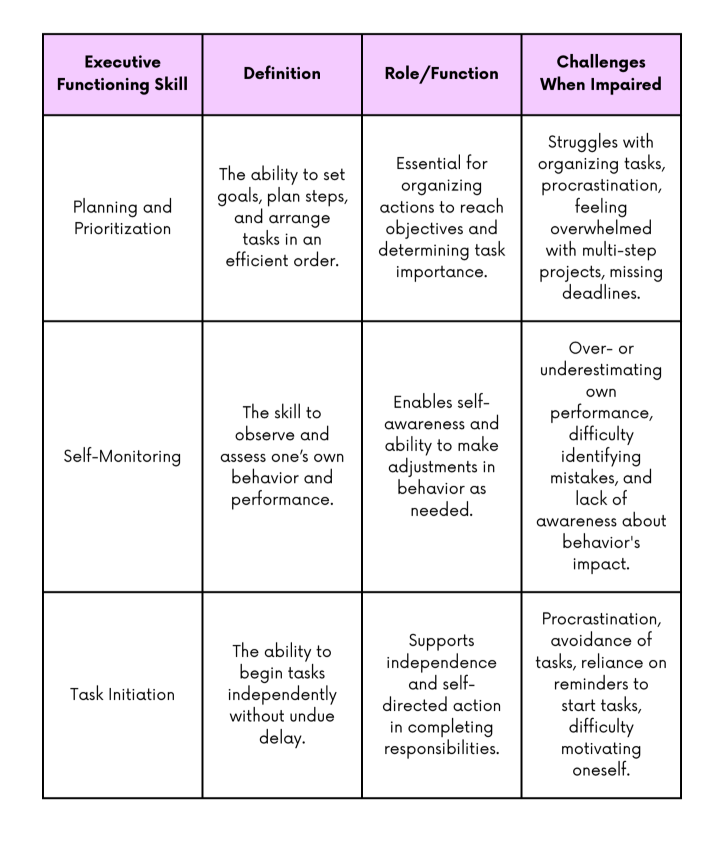
There can be an enormous amount of effort hidden behind what looks like ordinary life.
ADHD, for me, isn’t simply about being distracted or forgetting where I’ve put something. It isn’t a cute personality trait or an excuse for being disorganised.
It affects how I manage attention, emotions, thoughts, overwhelm and everyday demands. It can mean that something which looks tiny to somebody else can feel disproportionately difficult inside my head.
I had a battle with alcohol for most of my adult life, it helped to quiet the noise of my mind.
The hardest part is that, before diagnosis, I didn’t understand why.
I simply thought there was something wrong with me.
I thought I should be better at certain things.
I thought I should be able to control my reactions more easily.
I thought other people seemed to manage life without quite so much internal effort, so perhaps I was simply not trying hard enough and that people must think I am lazy.
An explanation, not an excuse
Getting a diagnosis in my late forties didn’t suddenly give me a collection of excuses.
It gave me an explanation.
And that distinction matters.
There is an important conversation to be had about overdiagnosis, inappropriate prescribing and whether every child who struggles at school needs medication. We should absolutely be asking those questions. We should also be asking much bigger questions about education, parenting, social expectations, children’s well-being and the environments in which we expect people to function.
But questioning how ADHD is diagnosed is not the same as questioning whether ADHD exists.
And challenging aspects of the current system shouldn’t require us to invalidate the experiences of people who have genuinely struggled with ADHD.
The experience of women and girls
The programme followed one case of a school age boy.
Most of the programme focused on the experience of one school-aged boy. His experience is important, and his story deserves to be heard, but one child cannot possibly represent the enormously varied ways ADHD can present.
Surely, if we are going to question a diagnosis affecting so many children and adults, we need to look at a much broader range of experiences—including girls, women, adults and people with different presentations of ADHD—rather than drawing a conclusion from one child’s story.
He had 6 weeks off the medication, at the beginning and then after the filming finished, went back on the meds so as soon as filming ended it was out of date as far as I am concerned,
Early diagnostic criteria and research historically focused on hyperactive young males, modern clinical guidelines and assessment frameworks now use standardised criteria designed to evaluate individuals across a wide spectrum of ages, genders, and life stages
There is a danger in conversations about ADHD when women are included only as an afterthought.
Many women have spent years becoming very good at compensating.
- We learn to work harder.
- We make endless lists.
- We arrive early because we’re terrified of being late.
- We over-prepare.
- We replay conversations in our heads.
- We become perfectionists because we’re trying to outrun the chaos we feel internally.
Sometimes the very strategies that help us cope are the reason nobody notices that we are struggling.
Including ourselves.
I didn’t grow up thinking, “I have ADHD and nobody has spotted it.”
I grew up thinking, “Why can’t I cope like everyone else?” “I am flawed”
That is why the language surrounding ADHD matters.
There are real people behind the statistics.
Real children.
Real parents.
Indeed, real adults who have spent decades wondering why ordinary life sometimes feels extraordinarily hard.
And real women who may have reached their forties or fifties before somebody finally put a name to something they had been experiencing all their lives.
We can hold two truths
I don’t believe that every person who struggles with concentration has ADHD.
I don’t believe every child who struggles in school needs medication.
I don’t believe medication should be the answer to an education system that doesn’t accommodate difference.
But I also don’t believe that the existence of overdiagnosis, misdiagnosis or medicalisation means that genuine ADHD is a myth.
Both things can be true.
We can demand better and more up to date assessment.
We can question prescribing practices.
We can improve our schools.
We can look at the pressures placed on children.
We can make sure ADHD is not used as a convenient label when another explanation fits better.
At the same time, we can recognise the very real disability and distress experienced by people who genuinely have ADHD.
For me, my diagnosis didn’t diminish me.
It didn’t make me less responsible for my behaviour.
It didn’t make everything suddenly make sense.
But it did give me a framework through which I could finally understand myself with a little more self compassion.
Perhaps that is what I found most difficult about the word myth.
Because after spending so many years believing I was simply too much or not enough—too loud, too talkative, too forgetful, too distracted—finally having an explanation was life-changing.
I don’t expect everyone to agree about ADHD.
I don’t even think we should stop questioning how we diagnose and treat it. In fact, I think we should keep asking difficult questions.
But let’s make sure that while we are questioning the system, we don’t accidentally make the people living within it feel that their experiences aren’t real.
ADHD Charity’s view
The charity ADHD UK quickly complained to OFCOM and gave instructions to us who wanted to do the same.
They urged Channel 4 to:
- Review the title and promotional framing against Channel 4’s own Online Complaints Code, which requires that materially misleading information is not published, and is corrected where it has been (Practices 1.1 and 1.2).
- Correct the press release’s out-of-date claim about who is being medicated.
- Offer ADHD UK, and others who have written to you, a preview screening and a right of reply, within the programme or in accompanying coverage.
- Make clear on screen where contributors’ views sit relative to mainstream clinical consensus – and disclose the presenter’s previously published position on ADHD.
- Set out the medical-ethics oversight of the filmed medication-withdrawal experiment.
- Broadcast clear signposting to support, in line with Ofcom guidance on content dealing with suicide and self-harm.
- Explain how this commission is consistent with Channel 4’s published disability strategy and its guidance on the portrayal of disability.
My ADHD diagnosis isn’t a myth to me, it’s an answer.
It’s part of the explanation for a lifetime of experiences that I didn’t previously understand.
And I think we need to be able to have a conversation about ADHD that is open minded enough to hold both truths:
Yes, we should question whether we are sometimes medicalising normal human differences.
Yes, ADHD can also be very real, very disabling and profoundly misunderstood.
Those two statements don’t have to cancel each other out.